Author: John

Hastings redux!

Hastings redux!

Henry being no fool!

Takes measures to consolidate his rule!

Henry I

Henry I

By marrying Edith or Matilda of Scotland as she became to be known, Henry had secured his northern borders. With a Scottish Queen in London, the Scots were unlikely to come leaping across the border to make a nuisance of themselves in England.

Robert may well be our rightful Duke!

But by God, his style of rule makes us all puke!

As Henry consolidated his rule in England by the use of a number of politically adroit measures, things in Normandy under Robert went from bad to worse. Although great in the saddle wielding a sword on the battlefield, he was hopeless when seated at a table in a chamber, holding a quill and a scroll.

The Duke when not in battle or tournaments, whiled away the hours in wine, women and song.

Duke Robert fighting at the Battle of Antioch.

Robert II at the Siege of Antioch, painting by J.J. Dassy, 1850. His bravery in battle was matched only by his buffoonery at banquets.

One story in particular illustrates the sheer buffoonery which characterised Robert’s court. As Duke, Robert was obliged  to attend a sermon given by Serlo, the saintly Bishop of Sees.

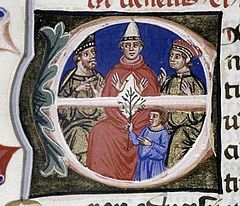
A medieval bishop on the diocesan throne.

A bishop in a medieval illuminationAs this was to be a very important occasion, Robert had new clothes made from silk and gold to wear. However the night before the ceremony, he had spent a drink-fuelled evening entertaining his guests and himself with harlots and jesters.
As Robert was carried off to bed in a drunken stupor, his companions for a prank, stole his newly made clothes and hid them. When the hapless Duke awoke, he discovered that he was without his fine clothes with which to attend the ceremony.

When the Duke awoke!

He realised he had no gown and cloak!

Of course all clothes in those days were custom made, there was no such thing as off the peg (Thank God for Marks and Spencers!).  Robert was forced to sit out the ceremony in bed.

Meanwhile back in England, Henry was pondering two problems. Firstly, the ever present threat of invasion from Robert and secondly, the annual payment that he was paying him which  represented a heavy drain on the Royal Exchequer. Also there was his personal ambition to match his father’s status as both King of England and Duke of Normandy.

But what of opportunity?

Sometimes it knocks!

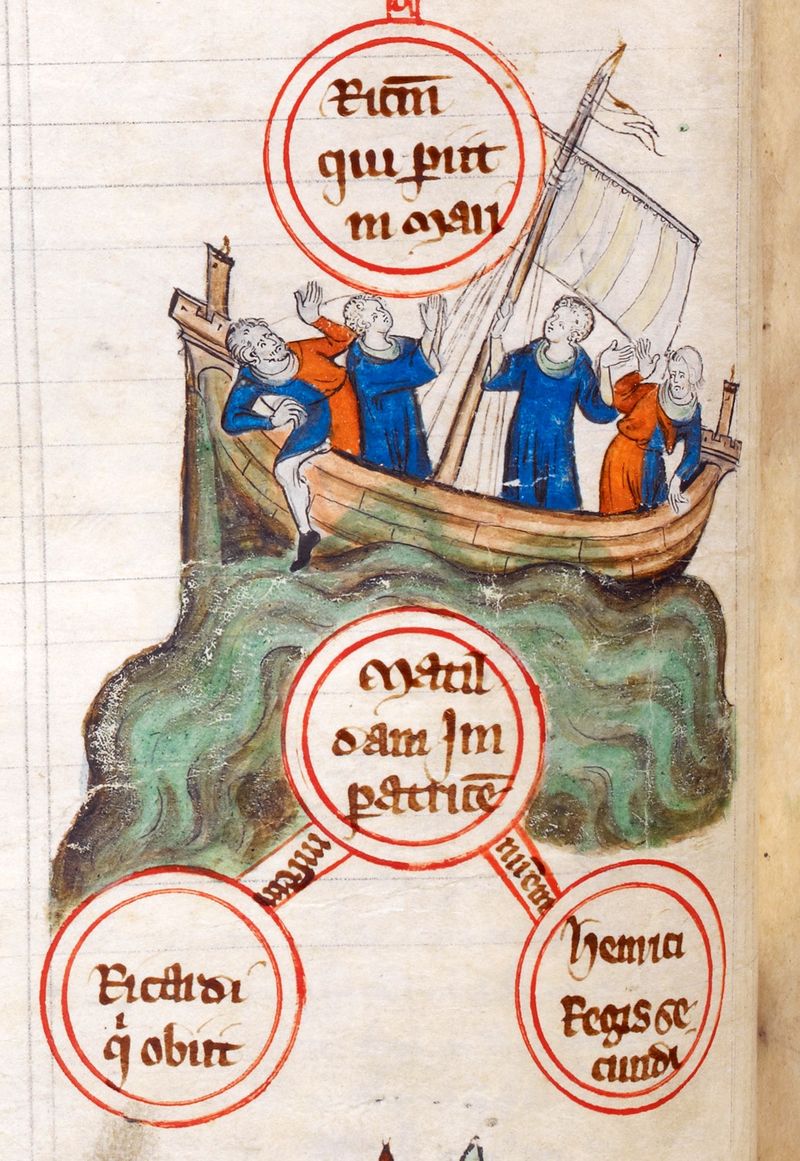
In 1106 it did. A group of senior Norman Churchmen visited Henry and called on him to sail to Normandy and restore order. Their message to Henry was:

Bobby’s little legs are unable to push the pedals of power!

This was music to Henry’s ears;  with the Church on his side he was now in a very strong position to challenge his brother.

Time to set sail!

With the Church on my side, I cannot fail!

Henry invaded Normandy and he and Robert’s army met at  Trenchbrai castle on September 28th 1106. The sibling rivalry which had begun with the chamber pot incident all those years ago  had reached its climax, after this, only one of the brothers would be lord of both England and Normandy.

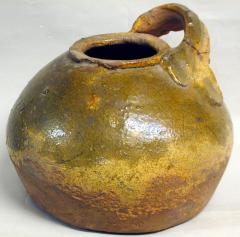
A medieval chamber pot which was probably similar to the one that caused a problem between the brothers in Rouen so long ago.


Henry’s army was a good deal larger than Robert’s but the Duke was considered a first class field commander and he had a wealth of experience in battle.

A much later depiction of the battle of Trenchbrai.

Battle of Tinchebray

Trenchbrai although almost forgotten today, was after Hastings, the most important battle of the Middle Ages. The battle lasted only an hour but in that time the future of the English crown swayed in the balance.

Nineteen illegitimate children and counting!

Nineteen illegitimate children and counting!

Yes, if Rufus had had no offspring, younger brother, Henry more than made up for it. He would sire at least nineteen children with a variety of mistresses.

Meanwhile,  back to the Afternoon of August 2nd 1100.

He left his brother’s body lying on the forest floor!

He arrived in Winchester and walked through the

door! 

Rufus had been struck by an arrow fired by Walter Tyrell, and had been killed instantly.  Henry, in an action that fell somewhat short of brotherly love, had sped hell for leather for Winchester leaving Rufus’ body lying on the forest floor. We can only imagine what solemn thoughts were going through this young man’s mind as he raced through the woodland in the fading sunlight. Uppermost in his mind must have been his elder brother, Robert who was engaged in the First Crusade in the Holy Land.

I have got to get my hands on the royal gold in the Treasury at Winchester. Then get the Archbishop, old gaffer, Anselm to crown me. No problem there, as he hated my brother.

Thank God, Robert is running around the Holy Land killing Arabs but as soon as he hears about this, he will be back here as fast as his little legs can carry him.

Anyway what’s he got to moan about? If he hadn’t tried to kill dad that time, the English crown would have been his by right!’ After that he was dead lucky that Dad gave him Normandy.’

Winchester Cathedral.

Photographic print showing the exterior of Winchester Cathedral, a Church of England cathedral in Wi (Photographic print showing the exterior of Winchester Cathedral, a Church of England cathedral in...)

Henry was crowned on August 5th in Westminster Abbey by the Bishop of London. He managed to secure the throne because so many of the nobles were relieved that the tyranny of Rufus was over, and because they harboured a deep distrust of his brother, the fickle and feckless Robert. In an astute act of political manoeuvring, Henry introduced the Charter of Liberties. The Charter gave  guarantees against unfair taxation, the seizure of Church property and other injustices which had been routinely carried out under Rufus.


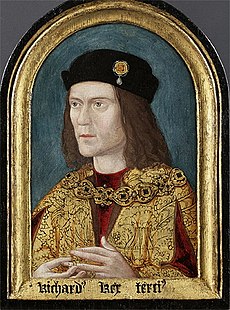
Henry I

Henry1.jpg

Brother Bobby is back!

Yes!  And he is on the attack!

Duke Robert felt that the English crown was rightfully his so he invaded England in 1101. In fact diplomacy took root, so hostilities were actually avoided. By the Treaty of Alton, Robert agreed to accept Henry as the legitimate King of England but in return, Henry had to pay him a large annual payment. The matter was settled…..or so it seemed.

Wedding Bells.

The King cemented his position with the Saxons when he married Edith, the daughter of King Malcolm III of Scotland. Her mother, Margaret,  was of the Saxon royal house of Wessex. and this meant that Saxon royal blood would flow in the veins of the next king of England.


The seal of Queen Edith or Matilda.

Matilda of Scotland

There had not been a royal wedding in England in sixty years and there was great rejoicing amongst the populace when the wedding took place in November 1100. They were married by Archbishop Anselm at Westminster Abbey.  At her wedding, Edith adopted the Norman name Matilda.

Did brother Bobby receive an invitation?

No! They felt that it was not worth the aggravation!

Some of the Norman nobles were unimpressed and accused Henry of ‘going native’ or becoming ‘more Saxon than the Saxons’ because he learnt to speak English.

Their daughter Matilda was born in 1102, followed by the birth of a boy and heir, William, in 1103.  William would be known as William the Atheling.  After the boy’s birth Henry and Matilda decided to live in separate palaces so Henry could attend to state business and involve himself in ….. well, the activity came to nineteen, and who’s counting?

Old Ruf’n Reddy!

Old Ruf’n Reddy!

King Billy’s Boys.

You may well have heard of sibling rivalry in families, well this family were something else in this respect. The first recorded conflict appears to have begun when Robert (Bobby short legs) and William Jr (Rufus) were teenagers.

Cube, Random, Luck, Eye Numbers, Points

An argument over a dice game led Rufus and Henry who were in an upstairs gallery tipping the contents of a chamber pot over Robert’s head who was standing below. A furious Robert ran after the giggling boys, and he was so angry that  the Conqueror himself had to be called to restrain him before he killed his two brothers.

Thereafter, things slipped and boy, did they slip!

William Rufus, the second Norman King!

Of  whom, very few, his praises would sing!

King William II (William Rufus)

The term rough and ready appears to be a fairly accurate description of this particular monarch. William was pretty rough in manner and he was always ready to defend his interests and indulge himself in all kind of pleasures, some of which shocked contemporaries.

William Rufus was born sometime between 1056 and 1059 and was the second eldest son of the Conqueror to reach manhood. He was named ‘Rufus’ for his red hair and ruddy complexion. He had enjoyed strong relations with his father and was William’s favourite son.  William was crowned king by the Archbishop of Canterbury, Lanfranc on the 26th of September 1087.

He became king through default as the rules of hereditary succession dictates that the eldest son, in this case William’s son Robert, should get the top job.

So how come Robert (Bobby short-legs) was passed over?

The feckless Robert had rebelled against his father and at one point almost killed William during hand to hand  fighting in battle. For once in his life William showed considerable forbearance, Robert got second prize, the Duchy of Normandy.

Holy smoke!

The Church really does not like this bloke!

The king had a somewhat less than cordial relationship with the Church. This was for a number of reasons. Contemporary chroniclers tell us that the Church took a dim view of both William’s taste in clothing and his personal manner, both of which they considered effeminate.  Many Churchmen suspected him of being a homosexual. The fact that he never took a wife, or had illegitimate children, led many to conclude that he was.

In those days, if a Bishop were to die, the revenue from his estates reverted to the crown until a new Bishop could be appointed.

Who appointed the Bishops?

In the first instance, the king!

Then the royal decision had to be approved by the Pope.

So it made sense for any medieval king to drag his feet when appointing Bishops because as long as the Bishopric remained vacant, the funds from the estate flowed into the royal coffers. The church were furious because it meant that they were losing money. All kings were at this scam, only Rufus was worse. He even dared to do this with Canterbury when Archbishop Lanfranc died.  Rufus was shameless!

Canterbury Cathedral.

canter

Short of cash?

Go give that monastery a bash!

Rufus also had a nasty habit of raiding monasteries when he was short of cash!

The New Forest

The Conqueror had loved hunting deer and decided to create a number of royal ‘hunting playgrounds’.  One of these was the New Forest in Hampshire. The Forest abounded with deer and the only person allowed to hunt was the King and his friends.

 His project involved the eviction of large numbers of people who lived in the forest, and who now became homeless as a result. The Conqueror introduced the death penalty for anyone caught poaching in the New Forest.   It is ironic that two of William’s son’s Richard and William Rufus would die there


The death of William Rufus!

On August 2nd 1100, Rufus led a hunting party in the New Forest. His companions included his younger brother Henry and a knight named Walter Tyrell.  As the men were about to depart, a letter arrived from the Abbott of Gloucester. The Abbott wrote that one of his monks had dreamt that the king would be killed soon. Rufus dismissed the warning, declaring that he had:

‘no interest in the dreams of snoring monks.’

What an almighty drag!

My arrow missed the damn stag!

As the men galloped through the woodland, they spread out but Tyrell stayed with the king.  Tyrell shot at a stag, but the arrow bounced off of an oak tree striking the king in the chest. Rufus was killed instantly.  Tyrell fled immediately, and then prince Henry, without delay, rode to Winchester to be crowned.

Whether this was a tragic (?) accident or a well planned assassination is hard to judge and impossible to prove.

The memorial to Rufus which stands in the New Forest.

Robert Curthose

The Final Days

The Final Days

Would you shed a tear

at the death of a ruler who had instilled great fear?

It is fitting that a ruler who instilled great fear and who inflicted such pain and indignities on others should suffer the same fate. He would spend his last days in the most appalling agony, express fear and after death his body would be treated in a most undignified fashion.

William’s later years were troubling ones. Matilda had died in 1083 and the very same year his son Robert had rebelled against him. In addition he had become grossly overweight. In fact his obesity was what eventually killed him but not in the manner one might think.

Agony

In July of 1087, the French King had joked that William was so fat that he resembled a pregnant woman. When William learned of the insult he flew into a terrible rage and vowed to extract revenge from his nominal overlord. On August 15 whilst in the process of destroying the French town of Mantes in Vexin his horse stumbled and his huge stomach was smashed against the pommel of his mount. He suffered serious injury to his intestines and in immense pain was carried to the Priory of St Gervaise in Rouen.

Fear

Realising he was close to death, William appeared to repent the savagery that he wrought. For probably the first time in his life he actually experienced fear. He is reported to have said:

‘I tremble when I reflect on the grievous sins which burden my conscience… now about to be summoned before the awful tribunal of God…I am stained with the rivers of blood that I have shed.’

The indignity of it all!

William died on the morning of September 59th aged 59. As soon as he was dead the nobles who were gathered around his bed speedily departed back to their estates because they feared that with the Conqueror dead disorder would break out. They feared for their properties.

With everyone gone, the servants stripped the Conqueror’s room of any of value including his bed linen. He was left lying almost naked on the floor of the bedchamber.

It was decided that he would be buried at the Abbeye aux Hommes in Caen

A modern image of the Abbeye aux Hommes in Caen.

The funeral would prove to be an extremely undignified affair. Firstly as the cortege marched through Caen an unwelcome distraction in the form of a house fire occurred. When the funeral procession arrived at the Abbey they were confronted by a man who said that he had not been paid for part of the land where the Abbey now stood. He demanded immediate payment and the Conqueror’s body had to be laid down while the authorities which may have included William’s son, Henry checked if the man was telling the truth.

Oh!  How ghastly!

It transpired that he was, and then at last the body proceeded into the church.

‘Oh thank God, now we can finally bury him with dignity!

Er….. well!

The chapel was filled with people, perhaps they had made the effort out of a feeling of sincere grief. However the funerals of those regarded as  having been successful are normally well attended while those of people deemed unsuccessful tend to be less so.

William had gained an enormous amount of weight since the construction of the tomb, and it proved exceedingly difficult to fit the body in. As they did so, William’s bloated bowels suddenly burst and the smell was horrendous. People who one second, were on their knees praying solemnly for William’s soul, were the next leaping out of the pews running for the door liked scorched cats.

The priests concluded the funeral service at break neck speed.

Caen Mens Abbey William the Conqueror Grave

William’s  tomb.

A class act? Well certainly an enduring fact!

A class act? Well certainly an enduring fact!

Keeping everyone in their role,

by a rigid method of social control!


The Feudal System.

Probably William’s most enduring legacy is his establishment of the feudal system which lives on today in the notorious English class system.

His first step was to confiscate the estates of the Saxon  nobility and give them to people that he could trust, his Norman barons. These men now became known as tenants in chief. In return for their lands the barons promised to fight for the King in the event of war. They also had to provide the King with an agreed number of  knights for forty days a year.

You must provide me with knights

for forty days and nights!

The barons then granted land to lower ranking barons who  were termed sub tenants. The sub tenants or lords of the manor were in turn  obliged to provide knights to the tenants in chief for forty days per annum.

The lords of the manor would then give land to the Saxon peasants in return for a specified number of services every year. These included working on the lord’s land for free for a certain number of days each year. This was greatly resented by the peasants.

While the lord of the manor feasted on a plate of roast pheasant!

Add Roast Pheasant to Favourites

The life for a Saxon peasant could  be extremely unpleasant!


William’s genius.

It is possible that a powerful baron with the vast estates that he received from William could challenge the king’s power. After all  with  the large number of knights at their disposal they might be well placed to represent a significant threat to the crown.

William made a point of ensuring that the lands of a baron were not concentrated in one area but spread across different parts of the country. Some of a baron’s lands might be in Kent, the rest could be in Wiltshire. This meant that any rebellious baron would find it difficult to gather his forces together in order to attack the King.

All doom and gloom?

We shall now take a look at

The Domesday book!

Ruling a country is some respects rather like running a business. A business man needs to know what funds he has at his disposal to finance his projects. A  ruler receives his revenue from taxation levied on the population, but William was not entirely sure whether or not people were paying their fair share of tax to the Royal Exchequer. Perhaps some people were short changing the king and if this was the case then it had to be stopped. The question was how to ensure that William was receiving what he was owed?

The solution?

Check out everyone’s true contribution?

In 1085, William sent his officials to virtually every village and town in England to find out exactly how much  land and livestock each and every person owned. The investigation was incredibly thorough, indeed exhaustive and in some areas greatly resented. As one chronicler observed:

‘There was not one ox nor one cow nor one pig which escaped notice.’

The results were compiled in a huge book entitled the Domesday Book.

The Domesday Book.

Meet the (new) royals! Father, Willie and mother, Matilda (Tilly)!

Meet the (new) royals! Father, Willie and mother, Matilda (Tilly)!

This was the family who to power in England ascended!

And from which the present royal family is descended!

England now had a new royal family. An exciting new development because King Edward the Confessor had had no children so there had been no ‘royals’ for decades. William had a formidable wife, a relatively large family including three sons who would engage in a fair degree of sibling rivalry even as adults. But  in common with their father would also become powerful rulers.

Mother Matilda  (1031-1083)


William was married to Matilda, daughter of the Duke of Flanders. William had not been Matilda’s first choice of husband. This honour fell to a Saxon noble, one Brithric who had once represented the English monarchy at her father’s court in Flanders. Matilda had developed a deep attachment to the handsome Saxon nobleman when she met him as a young woman. However it was a case of unrequited love because Britheric spurned Matilda’s amorous advances. The young woman was heartbroken.

To upset Tilly, well you really must be silly!

Can’t forget what happened to the man that she wanted instead of Duke Willie!

After the Norman conquest, Matilda persuaded William to strip Brithric of his possessions and have him imprisoned where he subsequently died.

Meet the children!

We need only mention the boys!

All three, once given power would avail themselves of its joys!

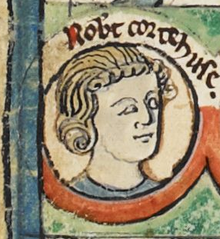
Robert Curthose ( Bobby short-legs (1051-1134

The eldest son, Robert would succeed his father as Duke of Normandy. Robert spent the first half of his life risking death on the battlefield and the second languishing in a Welsh jail at Cardiff castle having been imprisoned by his brother Henry. Despite a less comfortable life, he managed to reach the astonishing age of 83 which represented great longevity in the middle ages. However Robert’s incarceration was not entirely without achievement. He took the trouble to learn Welsh and wrote at least one poem in the language.


Robert Curthose - MS Royal 14 B VI.png

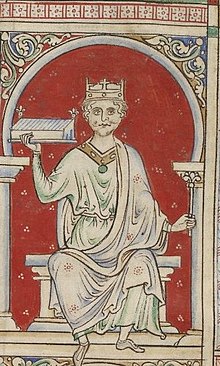
William Rufus (Rufus means ruddy complexion) c 1056 1100.

Wiilliam Rufus succeeded his father as  King of England and would  be killed by an arrow fired by a companion while hunting in the New Forest.


William II of England.jpg

Henry Beauclerc (Beauclerc means good administrator) c1068 – 1135. 

Henry was the youngest of the three surviving sons of the Conqueror and the only one to be born in England. As the youngest son, He was not expected to inherit very much at all from his father. However Henry would become both Duke of Normandy, and King of England. With the death of William Rufus and his jailing of Robert, Henry ended up with Conqueror’s entire estate.

Henry I

This was the beginning of the new dynasty that would rule England.

The Saxons receive no rest as William puts them to the test!

The Saxons receive no rest as William puts them to the test!

The arrows came hurtling through the sky and one struck Harold in the eye!

With this wound, the hopes of  all Saxon England would die!

This was the prevailing opinion of Harold’s fate although it has been disputed by historians in recent years. It has been suggested that Harold was actually killed by some knights who in a  somewhat less than chivalrous manner, then proceeded to cut his body into pieces. Harold’s two younger brothers Gyrth and Leofwine had been killed earlier that day and the Saxons now leaderless became disheartened and many  began to leave the battlefield.

Harold himself, fighting at the front of his army, fell covered with deadly wounds. The English, seeing their king dead lost confidence in their own safety, and as night was approaching they turned and fled.’

A Norman monk, William of Jumieges, writing in 1170.

The night was black as pitch

and many a Norman knight died at place known as ‘evil ditch’.

As the Saxons were fleeing back to their homes, the jubilant Norman knights decided to press their advantage and pursued them. Darkness was falling and being unfamiliar with the terrain, many of them fell headlong into a ravine that was obscured by brambles. The Normans called this place ‘Malfosse’ which translates as ‘evil ditch.’ Those that survived the fall were swiftly dispatched by the vengeful Saxons.

As an act of thanksgiving to God for his great victory, William would build an abbey on Senlac hill. The High Altar was said to mark the exact spot where Harold Godwinson had fallen.

An Englisman’s home is his castle?

Actually the first castles in England were built by the Normans and were greatly detested by the English. William immediately began a process of constructing castles built out of mud and timber. These castles were known as the ‘motte and bailey’ variety. They were built in this way because speed was of the essence. William simply did not have the time to build stone castles. He needed to base his forces in defensive shelters dotted across the land. The motte was a high mound with a small fort on the top to enable the Normans to spot any signs of trouble.  The soldiers would live in the bailey and in the event of any serious threat would take refuge in the fort on the motte. They proved to be a most effective device in securing Norman control in England

A room with a view!

Hey Mr Saxon we are spying on you!

A diagram of a motte-and-bailey castle at Olivet a Grimbosq. Wikimedia

A victory complete?

Has William now got Saxon England at his feet?

No! William would experience resistance to his rule. The most serious uprising against William occurred in the north of England in 1070. He crushed it with a savagery that went far beyond his customary severity in dealing with opposition. His brutal thoroughness shocked even his most battle-hardened commanders. William first defeated the rebels and he then proceeded to destroy the agricultural base of the region without which human life could not be sustained. King William inflicted total war on the population by killing every living thing including crops that he encountered in northern England. This was genocide as people died in their tens of thousands! Those who escaped being put to the sword would die of starvation or sickness as disease follows famine as surely as night follows day.  It was named the ‘Harrying of the North’ and its effects would endure for decades.


The day of the battle that changed England forever!

The day of the battle that changed England forever!

Location! Location! Location!

This is a must if we are to ensure the survival of the Saxon nation!

Select a position which will give the Normans  maximum aggravation!

On October 14th, the morning light illuminated the nature of the respective armies. Both were probably about 7,000 in terms of numerical strength. However apart from foot soldiers, the Normans had cavalry and many archers. The Saxons possessed neither, but their forces consisted of some 5,000 untrained and poorly armed peasants and perhaps 2,000 of the formidable, suicidal housecarls whose dedication to their king was beyond question.

Harold placed his men high on Senlac hill! It would be here that his army would fight and kill!

It would be here that Saxon England would do battle with the forces of Duke Will!

Senlac hill as it is today.

Harold would certainly not be the last property owner to decide on a birds eye view of the Sussex countryside when undertaking an important investment decision concerning essential resources. The Saxons had taken a position on a ridge which was flanked by marshes on either side and protected by thick woodland from the rear.

Why was this significant?

Harold knew that a vital element of the Norman attack would be by the cavalry! Men on horseback cannot charge effectively through dense forest which meant that he could not be attacked from the rear. The Normans would not be able to attack him from the left or the  right because horses are unable to gallop through marshy ground! Harold was forcing William to attack him uphill through a relatively narrow channel. When the Normans reached the top of Senlac hill they would be confronted by the formidable Saxon ‘shield wall’.

Harold drew his forces close and near!

Knowing that William could not attack him from the rear!

The Saxon army was protected on either side!

As through marshy land the Norman horsemen could not ride!


Early on the morning of October 14th, hostilities commenced! The Normans launched assault after assault and their archers kept up a deadly barrage of arrows but still the Saxon shield wall on Senlac ridge remained firm.

The battlefield from the north as it would have looked from the Saxon lines. 

Try as they might the Norman forces were unable to make a breach in the Saxon shield wall.  The Normans were constantly being driven back by a continuous volley of missiles thrown  from the Saxon ranks.

A scene from the Bayeux Tapestry showing Norman cavalry attacking the Saxon shield wall on Senlac ridge.

Things were not looking good for Duke William!  Indeed the low point in the battle for the Normans was when a rumour spread that William had been killed.  William quickly dispelled the rumour by lifting the face shield of his helmet and rallying his disheartened soldiers.

Bayeuxtapestrywilliamliftshishelm.jpg

The scene from the Bayeux Tapestry showing William raising the face shield of his helmet.


Behind their shields, us, do the Saxons await!

To break their packed ranks, we need some ingenious bait!

We must think of something soon, before it is too late!

According to some accounts, the Normans then thought of an ingenious trick! They would attack, pretend to panic and flee down the hill in apparent disarray.  The Normans hoped that the Saxons, seeing them in a state of fright, would break ranks and follow them down the hill thus creating a gap in the shield wall.

Our knights will feign fear, and run down the hill like frightened deer!

This will draw the Saxons away from the packed ridge and into the clear!

This is exactly what happened!  At an opportune moment, the Normans whirled their horses around and surrounded the Saxons  as they charged down the hill.  At the same time, other Norman  knights entered the gap in the shield wall made by the Saxons in their pursuit of the ‘terrified’ Normans! The shield wall was broken and this event rang the death knell, not only for many Saxons on Senlac hill, but also for Saxon England itself!

Enemies, both north and south.

Enemies, both north and south.

Rivals for the crown both the north and south!

News reaches Harold by word of mouth!

On September 25th, Hardrada headed from his camp at the banks of the Humber to travel to York to talk to the defeated local lords.  It was an unusually hot day, and expecting nothing in the way of trouble, his men had left their weapons behind them as they journeyed to York.  As they approached the city, hoping for little more than some rest and recreation within its walls, they were confronted with the awesome sight of the Saxon army.

The Saxons pounced on the near defenceless Norwegians many of whom tried to run back to the river Humber for their weapons.  One brave, enormous Viking stood with an axe on the entrance to Stamford Bridge and killed Saxon after Saxon with a circular swathe of his huge axe in a courageous attempt to buy time for his comrades to retrieve their weaponry.

Stamford Bridge on the river Derwent where Harold defeated Hardrada’s viking army.

Photograph showing Stamford Bridge and lake


Hardly cricket, old chap!

Not that we mind, we killed him with a spear from behind!

He was eventually killed by a Saxon who commandeered a curragh, and, sailing under the bridge in a rather unsporting spirit, threw a spear at him from behind.

At the days end Hardrada and Tostig both lay dead, as did so many of their men.  There were so few survivors that a mere 24 of the 300 ships that had arrived were sufficient to ferry them back to Norway.

At Stamford Bridge we slew the Viking beast!

Let us now retire to York to relax and feast!

Well, not for long!  As he savoured his victory over Hardrada, Harold received the disturbing news that William had landed at Pevensey on September 29th and was laying waste to his beloved home county of Sussex.

So gracious was the morning tide, so pleasant was the boat ride!

With great ease the sandy, Saxon beach, our Norman army soon did reach!

A lesson in the art of warfare, the Saxon king we will teach!

For William, the wind could not possibly have changed at a better time.  He was able to sail and land in England while Harold was in the north, and the southern coast lay undefended.

Thank God for Imperial Rome!  Their old fort at Pevensey would become William’s first English home!

William decided to put the old Roman fort at Pevensey to good use.  It had not been used in 600 years but the Romans had done a good job, it was still in good working order.  He would re-fortify it and use it as his base of military operations in Sussex.

The Normans went boldly forth from Pevensey’s Roman fort!

Across the fair, green land of  Sussex they plundered and fought!

Pevensey castle.jpg

The entrance to Pevensey Castle.  William’s pathway to England!

The castle had been built by the Romans as a defensive device to keep invaders out of the country.  William now used it as the polar opposite!  It would now play a crucial role in an offensive plan to allow invaders into the land!

Meanwhile, Harold’s victory celebrations at York were speedily terminated as he conferred with his commanders on how best to proceed.

For Harold the change in wind direction set forth a chain of events that would end in disaster!

Of his country, he would no longer be the master!

Harold decided on another surprise attack.  He saw the need for breakneck speed and marched the 250 miles along the old Roman roads so fast that he failed to stop for additional manpower.  His army arrived in London footsore and immensely fatigued.  On the evening of October 13th, Harold set up camp on a high ridge in Sussex, opposite William’s army.

England Invaded!

England Invaded!

The long wait, which would determine England’s fate!

Patience………., William certainly needed it. The wind stubbornly refused to change direction all summer long.   The wind was a problem, thought William, but boy was he wrong!  

The wind direction that brought William so much frustration,

would play a big part in winning control over the English nation!

Harold, expecting a visit from his Norman neighbour sometime during the summer had his reception committee, the fyrd, as the Saxon army was called, camped out along the southern coast throughout the summer months.  As autumn drew close, the members of the fyrd were anxious to go home in order to bring in the harvest.  

But from William, at summer’s end, no show!

Harold decided it was time to let his army go!

With the evenings drawing in, a relieved Harold withdrew from the coast and headed back to London. He would not expect to deal with William until sometime in 1067.  A leisurely autumn beckoned, with perhaps a spot of stag hunting around the county of Sussex before the snows descended in winter.

He could also  look forward to romantic evenings at his manor in Bosham with the love of his life, Edith Swan Neck.  Then, of course, the great feast of Christmas was but months away.  William could wait.  Unfortunately for Harold there was someone else, who couldn’t.  This threat came in the form of a gigantic, fearsome warrior ruler who lurked among the icy fjords of Scandinavia and whose reputation for military prowess stretched as far east as the arid climes of Egypt and Asia Minor. A man who stalked the inner recesses of the north like some Neanderthal alpha male and to whom the concepts of patience and diplomacy were entirely unknown. 

Yet another threat from a Viking warrior host!

The Norwegian  king has landed on England’s northern coast!

 This was Harald Hardrada, the 6 feet 6 inches tall king of Norway. He felt that he too had a claim to the English crown, and he decided it was time to come across to collect!  He was supported by king Harold’s own brother Tostig, who in a fit of unbrotherly love had aligned himself with the formidable Hardrada.

A coin depicting an image of Harald Hardrada, King of Norway.


Hardrada and Tostig had landed on Humberside in September and swiftly defeated the local forces at the battle of Fulford.  Hardrada then intended to march south to face king Harold.

King Harold and his army work fast with their feet!

They are in a hurry, for they have a bunch of Vikings to beat!


Harold, learning of the presence of this unwelcome visitor to his kingdom, reacted swiftly.  He decided to force march his army northwards, along the old Roman roads at breakneck speed with a view to surprising Hardrada at York.  The Saxon army included Harold’s elite bodyguards known as the housecarles. The housecarle tradition was Scandinavian in origin but had been introduced to England during the earlier years of Viking rule. They were the 11th century equivalent of the SAS, or US Special Forces, and their savagery was legendary.  They could always be relied upon to get a lot more than a pound of flesh from any foe that they might encounter.  Hardrada was unconcerned because he had a full stable of precisely the same type of warrior.

Unfortunately for Hardrada, Harold had arrived in York much faster than anyone could have forseen.


The Battle of Stamford Bridge.

King Harold completely surprised Hardrada and his Norwegian host. Hardrada and his men, flushed with joy over defeating the Saxons at Fulford were heading to York in celebratory mood. They were looking forward to a day of wine, women and song. Many of them had left their weapons at the camp on the banks of the river Ouse.

You came to York expecting music, girls and booze!

But the Saxons were waiting and from your bodies, much blood would ooze!

The Saxons pounced on the astonished Norwegians at Stamford Bridge and swiftly defeated them. It was not a battle but an orgy of slaughter. Hardrada himself was slain.

Despite a rapid march, Harold’s army did not falter!

At Stamford Bridge, they made great slaughter!

As he waited at the port of Saint Valery in Normandy, William  would have been aware of Hardrada’s excursion into England. However, he would have been unaware of the events at Stamford Bridge. Which of the two formidable warriors would he face; Harold or Harald? Food for thought. Suddenly the wind changed an William was ready to sail.

The Norman fleet leaves Saint Valery on September 27th.